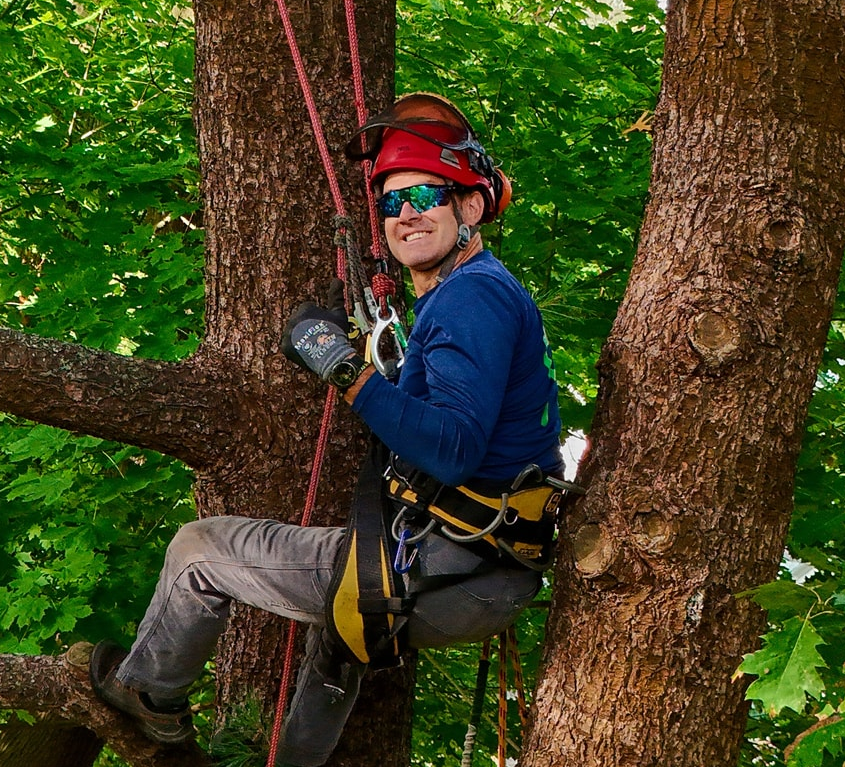
Sub-Surface Fertilization Before the Ground Freezes
How Deep-Root Feeding Supports Tree Health in Massachusetts
As the growing season ends in Massachusetts and the first cold fronts begin to settle across the Metro West region, many homeowners assume that tree care pauses until spring. But below the surface, your trees are still active—especially their roots. The period between early fall and the ground’s first hard freeze is one of the most important windows for supporting tree health, particularly for ornamentals and shade trees experiencing stress from drought, competition, soil compaction, and nutrient deficiency.
Sub-surface fertilization, also called deep-root feeding, is a highly targeted method of delivering essential nutrients directly into the root zone, where they can be absorbed immediately and stored for use throughout winter and the following spring. At Peer Arboricultural, our ISA-certified arborists use this technique not as a generic “boost,” but as a scientifically informed treatment customized to each tree’s species, site conditions, and stress level.
Why Trees Need Support in Fall
Even though leaves are dropping or already gone, your trees are not dormant yet. In fact, root activity continues until soil temperatures fall consistently below ~40°F. During this time, trees focus energy on:
Strengthening the root system
Storing carbohydrates
Repairing stress-related tissue damage
Replenishing nutrient reserves
This makes fall the optimal season to correct nutrient deficiencies and support structural root development. Many Eastern Massachusetts landscapes have soils that are naturally low in key macronutrients and micronutrients, meaning that trees often spend the growing season in a state of mild nutrient stress. Providing support before winter allows the tree to enter dormancy with a full reserve tank.
The Hidden Causes of Nutrient Stress in Urban and Suburban Trees
Contrary to popular belief, nutrient depletion rarely results from a lack of fertilizer applied to lawns or garden beds. Instead, it stems from deeper, systemic conditions that affect root health and soil function. These include:
1. Soil Compaction
Foot traffic, lawn equipment, new construction, and even routine mowing gradually compact soil. Compaction:
Restricts root growth
Limits oxygen exchange
Reduces water infiltration
Prevents nutrients from moving into fine root zones
Compacted soil essentially starves roots, even when nutrients are present nearby.
2. Competition from Turf and Shrubs
In many residential landscapes, turf roots and ornamental shrubs dominate the upper soil layers. Turfgrass, in particular, is highly competitive—it absorbs water and nutrients faster than most tree roots. Without intervention, large shade trees slowly decline within turf-dominated landscapes.
3. Drought and Irregular Moisture Patterns
Metro West Massachusetts has experienced notable drought stress over the past several growing seasons, despite occasional periods of heavy rain. Trees respond to drought by:
Reducing root growth
Cutting back nutrient uptake
Shedding leaves early
Allocating energy strictly to survival
These conditions make fall deep-root fertilization especially important for recovery.
4. Disturbed or Poor-Quality Soil
Many properties—especially newer developments—sit atop fill material rather than native loam. These soils are often low in organic matter and essential nutrients such as nitrogen, potassium, and iron.
5. Species-Specific Sensitivities
Some trees—like maples, birches, and many ornamental varieties—are more sensitive to soil nutrient imbalance and root competition. Others, such as oaks, require well-aerated, biologically active soils that suburban conditions rarely provide without assistance.
What Sub-Surface Fertilization Actually Does
Deep-root fertilization is not the same as spreading granular fertilizer on the soil surface. Instead, arborists use high-pressure equipment to deliver a slow-release, balanced nutrient solution 12–18 inches below the surface, directly into the root zone. This process offers several advantages:
1. Precision Delivery
The nutrients bypass turf competition and reach absorptive fine roots immediately.
2. Increased Soil Aeration
The injection process naturally fractures compacted soil, improving airflow and helping water penetrate more deeply.
3. Long-Term Availability
Professional formulations include slow-release components that provide nutrients over many months, supporting root development during dormancy and fueling spring growth.
4. Enhanced Stress Recovery
Trees subjected to drought, disease, or mechanical injury benefit from improved nutrient availability when rebuilding root tissue.
5. Strengthened Defense Mechanisms
Trees with adequate nutrient reserves are more resilient against:
Insects
Fungal infections
Winter injury
Spring leaf-out stress
Sub-surface fertilization essentially reinforces a tree’s metabolic toolkit.
When Is the Best Time for Deep-Root Fertilization?
The ideal timing is early fall through late fall, up until the soil begins to freeze. During this window, trees are redirecting energy from foliage to roots, making them more receptive to the treatment. In Massachusetts, this typically means:
Late September – early December, depending on weather
Before the ground hardens
After most leaves have dropped (optional but beneficial)
Applying nutrients too early in the season can stimulate unwanted late-season leaf growth, while applying too late limits absorption. Arborists adjust timing based on species, site conditions, and annual climate patterns.
Which Trees Benefit Most?
While almost all landscape trees gain value from deep-root feeding, certain situations strongly indicate the need for treatment:
Trees showing signs of stress (thinning canopy, small leaves, dieback)
Large shade trees competing with dense turf
Newly transplanted trees needing establishment support
Specimen trees with aesthetic or historical importance
Trees growing in compacted, rocky, or sandy soils
Properties with a history of drought stress
Ornamental species with nutrient sensitivities
Peer Arboricultural evaluates each tree individually rather than applying fertilizer indiscriminately. Over-fertilization or incorrect nutrient balances can be harmful, so professional diagnosis is essential.
Sub-Surface Fertilization vs. Surface Feeding: Why the Difference Matters
Surface-applied fertilizers benefit turf more than trees. Tree roots reside deeper than the absorption zone for granular lawn products. Additionally, turf absorbs nitrogen faster and more aggressively, leaving little for the tree. Deep-root feeding ensures nutrients bypass competitive layers and are delivered exactly where needed.
How Peer Arboricultural Tailors Nutrient Programs
Our arborists do not believe in generic treatments. Every sub-surface fertilization service is calibrated based on:
Tree species
Age and size
Soil composition
Root-zone limitations
Environmental stressors
Property goals
Overall landscape health
We use scientifically formulated blends designed for sustained release, improved soil structure, and strong root system development.
Conclusion
As winter approaches here in Massachusetts, your trees are relying on their roots more than ever. Sub-surface fertilization—performed before the ground freezes—provides essential nutrients directly to the root zone, supporting recovery from the year’s environmental stress and ensuring a strong start in spring.
For homeowners looking to proactively maintain their landscapes, deep-root feeding is one of the most effective and scientifically backed investments you can make. Peer Arboricultural is here to assess your trees, diagnose underlying soil issues, and deliver precise, high-quality fertilization treatments tailored to your property.