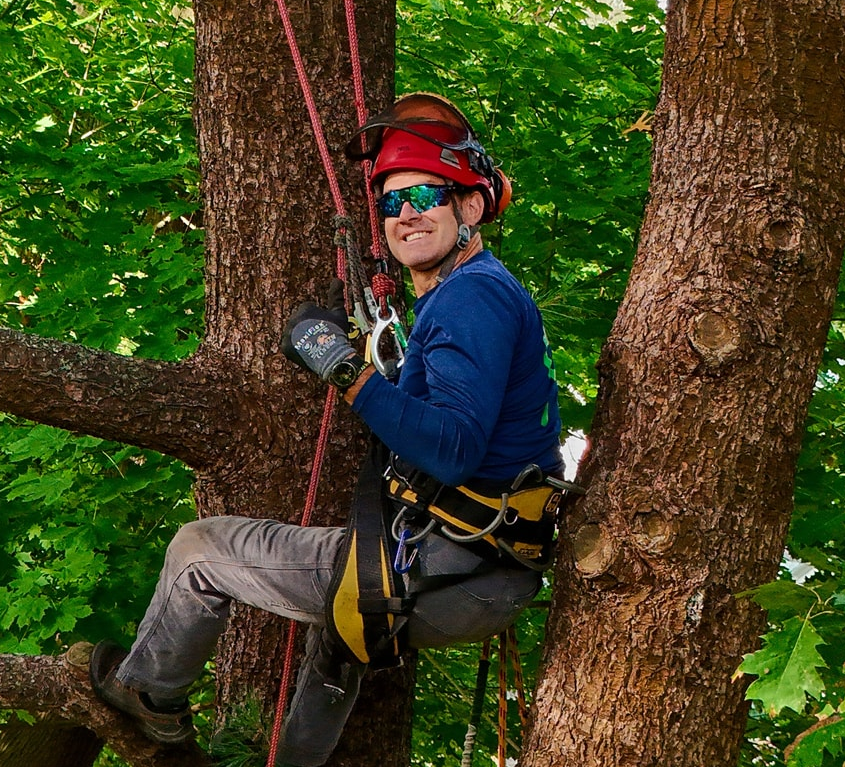
Fall Tree Assessments Reveal Hidden Structural Risks
When the leaves drop across Massachusetts, homeowners often assume that their trees are “resting” for winter and nothing more needs to be done. In reality, this is one of the most critical times of the year for evaluating tree health and structural integrity. A leaf-off tree assessment is the arboricultural equivalent of taking an X-ray—suddenly the entire branch architecture becomes visible, revealing issues that are hidden during the growing season.
At Peer Arboricultural, our ISA-certified arborists rely on this window of clear visibility to identify defects, safety hazards, and developing health issues long before they become emergencies. With Massachusetts experiencing increasingly unpredictable storms, freeze-thaw cycles, and wind events, proactive fall assessments have become a foundational part of responsible tree ownership.
How Leaf-Off Tree Assessments Work
During spring and summer, dense foliage masks the internal structure of a tree. Even trained arborists have a limited line of sight. Once the leaves drop, everything changes. The entire branching system can be analyzed for:
Dead, dying, or structurally unsound branches
Cracks, cavities, and old storm damage
Fungal bodies, borer activity, or decay pockets
Co-dominant stems and included bark
Weak branch unions
Improper past pruning
Hidden failures beginning within the crown
Our arborists carefully evaluate species-specific tendencies. For example, Norway Maples often develop broad, heavy crowns that mask early decay; Red Oaks may show upper-crown dieback only visible in winter; and Birches, Beeches, and ornamental cherries may reveal stress fissures you simply can’t see through summer foliage.
Why Structural Defects Are Easier to Diagnose in Fall
Trees are dynamic organisms, and flaws develop gradually. During leaf-on months, foliage weight can hide subtle cracking or distorting branch angles. Winter reveals:
1. True branch load distribution
Arborists can see whether limbs are overly extended or unbalanced.
2. Sun-exposed vs. shaded wood differences
Discoloration, sunscald cracks, and fungal lesions are clearer.
3. Canopy symmetry and weak lateral attachments
These may look normal in summer but become obvious when bare.
4. Root flare visibility
With leaves raked away, girdling roots and soil heaving are easier to identify.
A fall inspection provides the most accurate full-tree diagnostic available outside of advanced tomography.
Reducing Risk Before Snow and Ice Arrive
Massachusetts winters regularly bring nor’easters, heavy snow loads, and sudden freeze-thaw cycles—conditions that exaggerate weaknesses. Limbs at risk of failure are more likely to break when:
Ice accumulation increases branch weight
Sudden temperature drops cause frost cracks
Wet snow adheres to unbalanced crowns
High winds exploit weak unions
A fall assessment ensures that hazardous branches can be pruned before winter weather triggers a failure. Preventative pruning is always more cost-effective than post-storm cleanup or emergency removals.
Using Assessments to Plan Long-Term Tree Care
Beyond immediate safety, leaf-off evaluations help plan:
Structural pruning needs for young trees
Cabling and bracing for mature trees
Soil and root zone improvements
Insect and disease monitoring for the coming year
Fertilization or other health-care interventions
Multi-year management plans for large properties
This ensures your landscape is not just maintained but strategically guided for longevity.
Why Homeowners Should Not Perform DIY Assessments
Tree defects can be subtle, and misinterpreting them can have serious consequences. What looks like a harmless dead twig may actually be the visible portion of a larger internal decay column. Likewise, not every crack or cavity creates hazardous conditions. Proper evaluation requires training, experience, species knowledge, safety protocols, and often climbing or aerial equipment.
Partnering with an experienced Metro West arborist ensures that decisions about pruning, risk management, or removal are based on sound, science-backed assessments—not guesswork.
Conclusion
If you have not yet scheduled a leaf-off tree inspection, fall is the ideal time to do so. Peer Arboricultural provides detailed assessments that help property owners protect safety, preserve mature canopy trees, and identify early health concerns before winter stressors arrive. With the clarity of a natural X-ray view, we can reveal what your trees have been hiding all year.